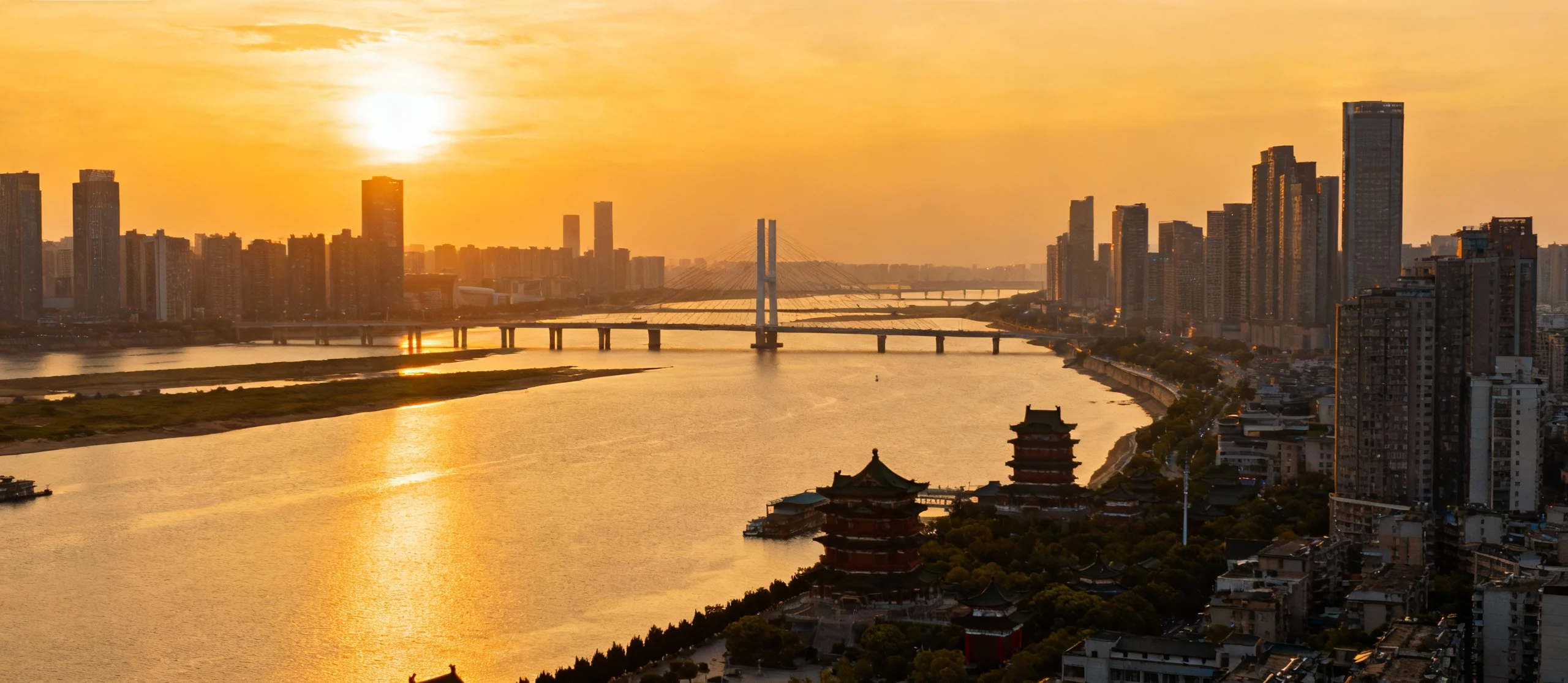
Nanchang, a “City of Heroes” nurtured by both history and the jianghu spirit, lies quietly beside Poyang Lake, China’s largest freshwater lake. The winding Gan River runs through the city, dividing it into an old, time-honored quarter and a modern new town. It is far more than a provincial capital on the map—it’s an epic that cannot be finished in one reading.
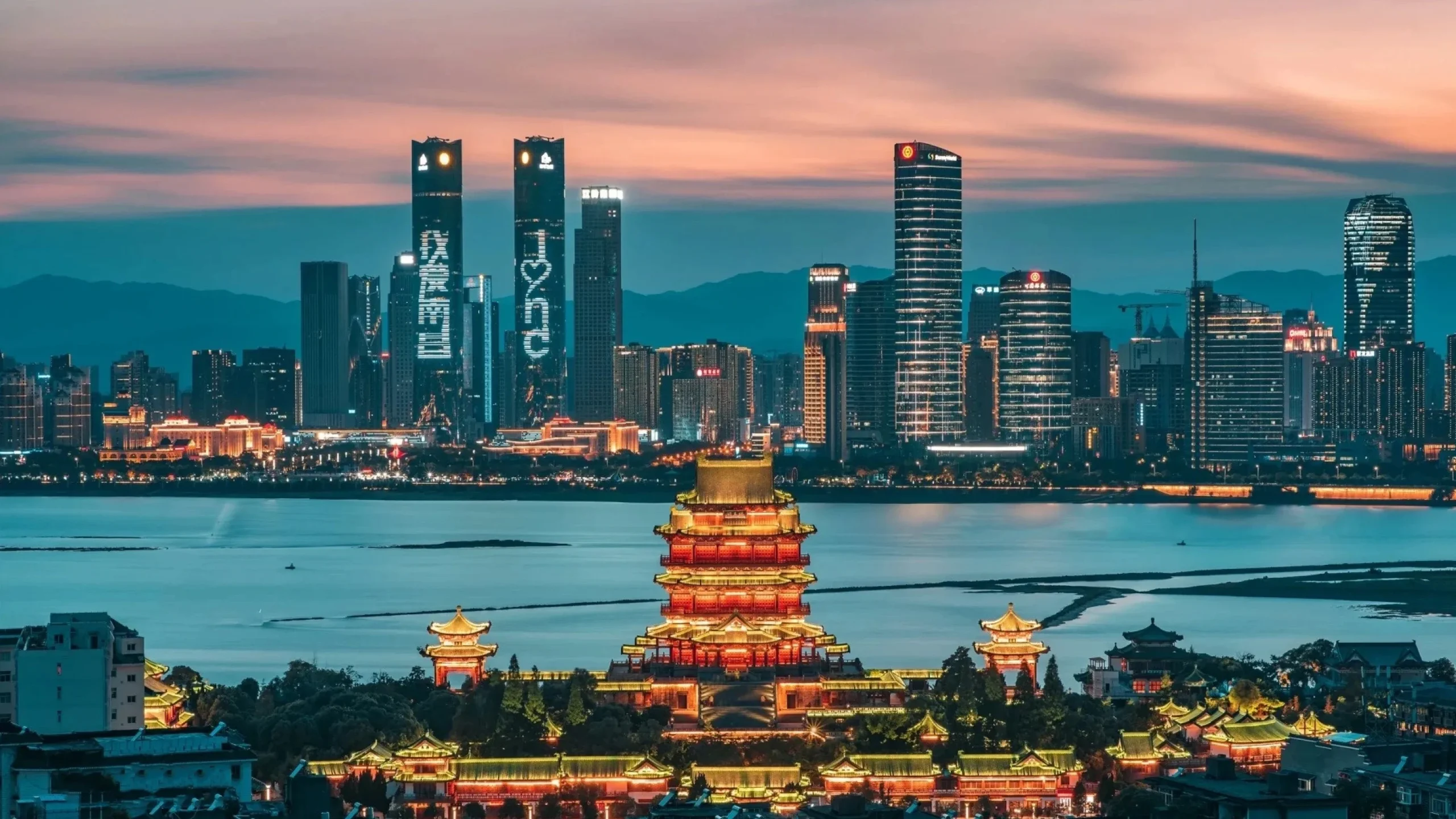
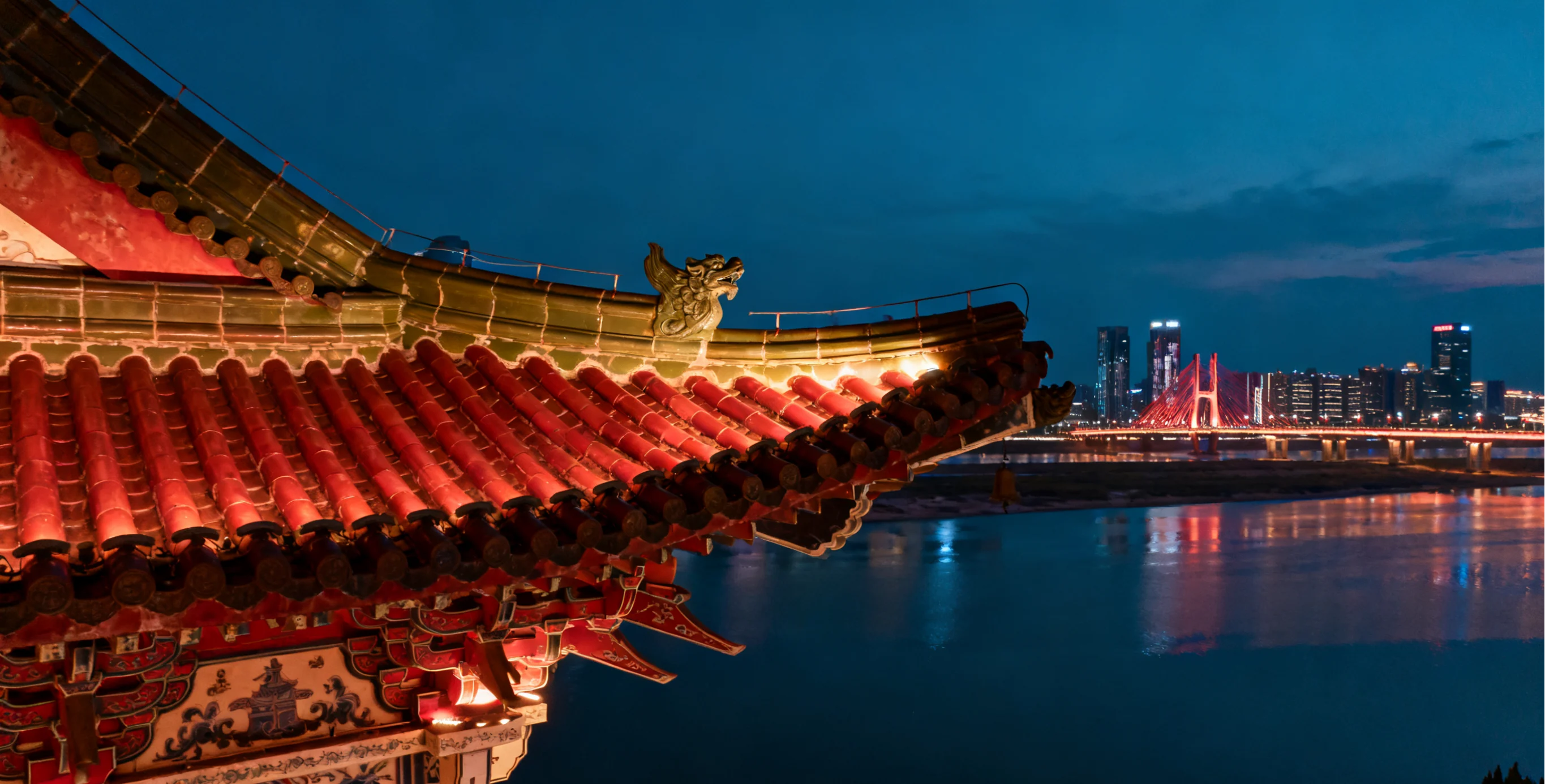
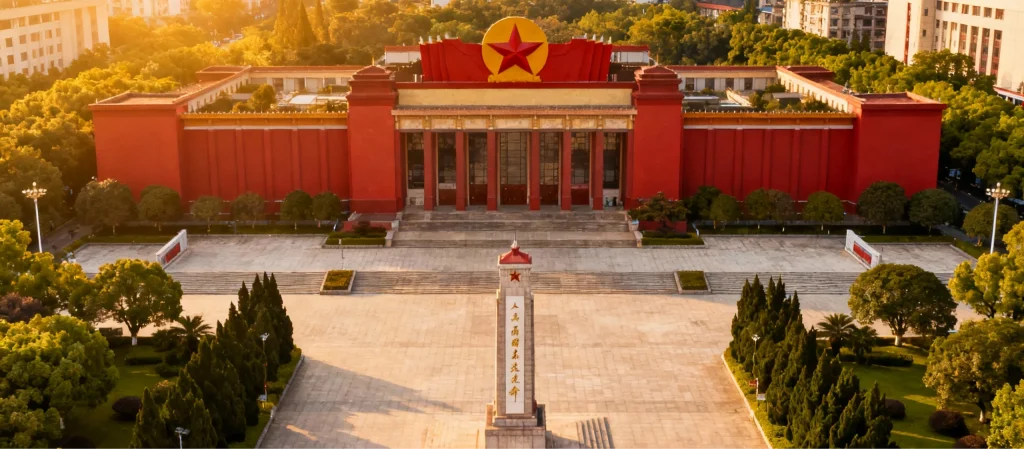
A trip to Nanchang is a poetic walk shuttling between the fires of history and the waterscape of rivers and lakes. In the early morning you can ascend the millennium-old Tengwang Pavilion, and by the Gan River seek the magnificent artistic conception in Wang Bo’s line “the setting sun flies together with a lonely wild goose.” In the afternoon, stroll the August 1 Nanchang Uprising Memorial Hall and, among bricks and tiles, listen to how the earth-shaking first shot rewrote China’s history. When night falls, the Qiushui Square musical fountain performs a gorgeous movement of a modern metropolis; a night cruise lets you witness the classical flying eaves of Tengwang Pavilion and the skyscrapers of Honggutan completing a dialogue across a thousand years in the river’s reflections. Don’t forget to step onto the bluestone lanes of the Wanshou Palace Historical and Cultural Block, taste authentic banfen (mixed rice noodles) and earthen-pot soup amid the curling everyday smoke and fire, or meet the glittering gold unearthed from the Marquis of Haihun tomb at the provincial museum to understand the true meaning of “abundant natural treasures and outstanding people.” This city, bathed in the ripples of Poyang Lake, is brewing red legends, classical poetry, and the spirit of rivers and lakes into an intoxicating Gan-Po elegance.
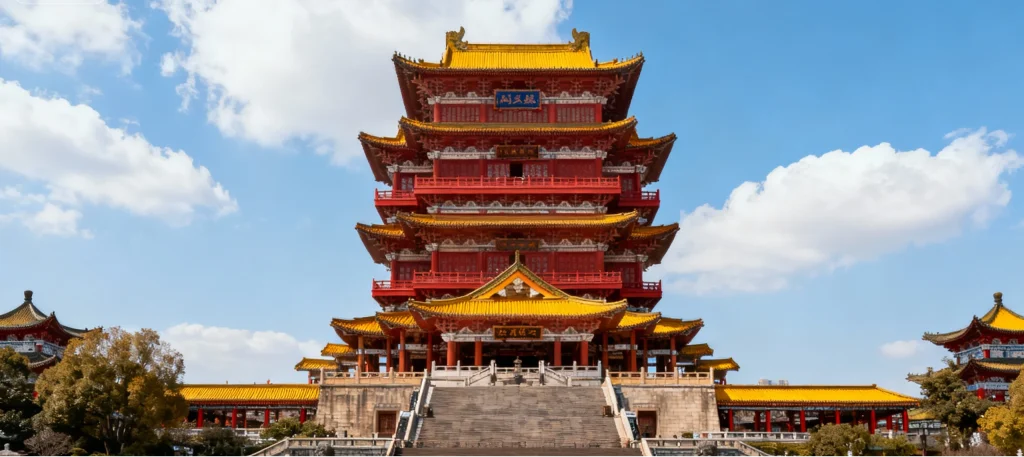
Go to the “No. 1 Pavilion under Heaven”—Tengwang Pavilion. Here, not only climb to gaze upon the grand scene of “the setting sun flying with a lonely wild goose; the autumn waters sharing one color with the vast sky,” but also carefully appreciate the murals, couplets, and displays inside the pavilion, and learn about its history of nine destructions and nine reconstructions. Tengwang Pavilion is not just a building—it is the cultural soul and spiritual landmark of Nanchang. Head to Qiushui Square to watch Asia’s largest musical fountain complex. Then you can stroll along the riverbank to enjoy the brilliant “lights on both banks” night show. The modern skyscrapers and the time-honored Tengwang Pavilion reflect each other in the night, forming the essence of Nanchang’s night view.
Go to Bayi (August 1) Square to pay respects at the Bayi Nanchang Uprising Memorial Tower. Then visit the “First Museum of China’s Military History” — the August 1 Nanchang Uprising Memorial Hall, the birthplace commemorating the founding of the People’s Liberation Army of China. This is where the “earth-shaking first shot” was fired and holds unparalleled revolutionary historical significance. Stroll the Wanshou Palace Historical and Cultural Block. This is not an isolated sight but an immersive urban cultural leisure district. Built around the thousand-year-old Taoist temple “Tiezhu Wanshou Palace,” it revives the elegance of the ancient city of Yuzhang. Bluestone lanes, antique-style architecture, specialty shops, cultural-creative markets, and authentic snack stalls are interwoven—both historical and vibrant. There are intangible-heritage studios, creative handicraft shops, and street performances; it’s perfect for slow wandering and photography. Finally, head to Shengjin Pagoda; the ancient pagoda looks especially serene under night lighting.
In the morning, visit the Jiangxi Provincial Museum (new building)—the best window for understanding Jiangxi’s history and culture. Focus on the exhibition of artifacts from the Marquis of Haihun tomb; the astonishing quantity of gold and bronzes will unveil the luxury and mystery of Han-dynasty nobility. In the afternoon, explore the Bada Shanren (Zhu Da) Memorial Hall. The compound is simple and ancient, hidden within the Meihu Scenic Area, with a quiet environment. Here you can appreciate the freehand ink paintings of a top master from the late Ming and early Qing, and feel the aloofness and desolation within his works.